Sunday, March 27, 2011

Sand Dunes!

Well we know that there are sand dunes in the Sahara, and so it is important to have a crack at them to make sure the gaiters are effective at keeping sand out of the shoes.

It took a while, but finally I found a cobbler who was able to glue and sew my silk knee-high gaiters to my trail running shoes. The cobbler was at a little shop (shack) right near Middle Brighton railway station.

Sure they look a little silly, but I have heard feedback from past MDS competitors that they would wear clown shoes if they would keep the sand out of their shoes!!

Blisters are a major reason why people dont finish the event, so anything that keeps sand out of the shoes, has got to be a good thing!

OK so I found a sand dune that turns out to be about 80m high. Smaller than most in the Sahara, but still a good test.


Then it was up we go - shoulders back, running up the sand dune... looking good as we start up the steep sandy slope!


Pretty quickly it got a bit harder....


And then it got so hard.. it was just a slow hard slog just to get up. Shoulders down, just trying to put one foot in front of the other, with the sand slipping between your feet! This really was a good test of the gear for Sahara conditions!!


Sometimes it was hard to even put one foot in front of the other!!


Finally, at the top! An 80m sand dune climb took over 3 minutes!!


Sucking in the air!!


Then the fun began.. flying DOWN the sand dune! It was actually stacks of fun, easy to go down and stay balanced, and took about 20 seconds to come down!!


And the result, no sand in the shoes! The gaiters worked! Highly successful test!

Went up and down again for a second time, and tried to kick up as much sand as possible coming down, and again, no sand in the shoes!! Awesome!


MDS Dress Rehearsal - on the sand

Finally we had a bit of summer in Melbourne and a day on a weekend got to 30 C, so it was down to the peninsula beaches for a full dress rehearsal in full race gear.

The plan was to about about an hour with a full pack (about 8kg in it for the test), and all the gear I was planning to use during the race.

Now of course this is a public beach, so seeing some one trundle along with a safari hat, long sleeved shirt, back pack and knee high gaiters... well let's just say I got some funny looks!


On the plus side, everything was very comfortable and I was surprised that I could waddle along ok on the firm sand.


And it was great to get a training run in with Jill and Patrick!!


Nice place to go for a training run!!


So the dress rehearsal was a success! Bring on the MDS!!

Maroondah Dam Trail Run 30km

In 2010 the conditions for the Maroondah Dam trail run were oppressive, it was 35 degrees plus, there was limited water, a group of us got lost and there were hills and more hills.

Perfect training for the Marathon des Sables!! So I entered again for 2011!

The only trouble being, Melbourne had its wettest summer in living memory! Course conditions on race day were cool, wet underfoot in parts, and the risk of rain. The hills however, were still as big as last year!

Most of the run is on trails and its a lovely run. My goal was to treat it like it was the MDS, let the pack go, and stick to my heart rate. Also I was wearing about a 4km pack...


And probably the best picture of them all I took for this event


Some of the hills are really brutal


So I was happy to rest on the hills and take some photos!!


A happy team at the first checkpoint and aid station


Another of the long uphills


And they the mist came in, and it was delightfully spooky :)


And then it was up to the highest part of the course, up the steepest terrain. Unfortunately just after this photo was taken, the misty light rain turned to heavy rain and the descent down from this point - which is normally treacherous on dry ground - was almost impossible on wet ground. I slipped probably 20 times but somehow never fell, and my quads copped an absolute pounding from trying to brake on every step.


Finally the rain cleared and you see the water channel, so you know you are getting close to the Dam, and the end!! Dry clothes were looking good right about now!


And then the welcome sight of the Dam comes into view


And finally, the finish!


Its a great event, really well run, and its tough on the legs with the hills. There is over 1100m of vertical ascent on the course! Not bad for 30km!

My quads were so sore afterwards, it took me 5 days before I went ok to run again!

Training for the Marathon des Sables

Ok, so now I am entered, its late December and I have three months to turn a body that has just had four weeks recovering from an ironman, into a body that can cover 250km in a week, carrying a backpack weighing up to 10kg at the start of the event.

The task is best described as .... tricky.

Having had some leg issues in the past (stress fractures), I have always been conservative with my running. Less is more, if I get past 60km in a week I tend to get sore, despite getting a weekly massage.

In 2010 I did the Comrades marathon in South Africa, an 89km race that is very hilly. Training for that involved one long run every weekend, with a few shorter runs during the week.

Looking back, I think doing very long runs every weekend (longest 62k, 8 runs of 40km or more) actually took too much out of me, even though they were at a low heart rate and intensity. And of course, the idea there was to peak for a one day event, not be capable of backing up day after day for a week like you need to do in the MDS.

So the program here was different, I would need to run consistently, and to train the body to recovery quickly, and go again the next day. But I had to be careful, I had to start slow in order to avoid injury, but I had to build mileage quickly if I was going to prepare myself adequately.

So training was going to be a fine balance due to the time available.

The answer of course, is to train at a low intensity. This event for me is not about winning, its about finishing. And I wont be running the whole way so its about a run / walk strategy. With that in mind, building miles was then as much about time on the feet.

I set a limit as no more than 30km in any session, but would do lots of 25-30km sessions, trying to mimic as much of the event as possible.

Training for the event started in the last week in December and I decided I would continue to do some swimming and biking as cross training, to keep building the fitness, without the impact of running.

TRAINING PLAN
The following table shows my MDS training:

Week Run Km No of Runs Longest Run X Training sessions

Dec 9 1 9km 1
3 Jan 37 4 12 7
10 Jan 44 4 16 5
17 Jan 57 5 21 5
24 Jan 58 4 21 5
31 Jan 60 3 25 3
7 Feb 82 5 25 4
14 Feb 84 5 30 2
21 Feb 41 2 25 2
28 Feb 84 5 29 1
7 Mar 102 6 29 1
14 Mar 52 3 25 0

The race taper began on Mon 21 March and given its such a long event at 250km, I have decided that the taper needs to be long also, so its a full two week taper.

During that time, I plan not do any running sessions at all, giving the legs, muscles, micro fibres etc, plenty of time to heal and recover. After all, in the last two weeks I am not going to get any fitter, only risk injury and soreness, so its time to let the body absorb the training that's been done, stay healthy and freshen up.

You will have noticed the number of cross training sessions drop substantially from 14 Feb onwards. There is a simple reason for that, I got a job. Having taken a package from my last employer when the company was acquired and a significant restructure done, I had plenty of time to train as and when I liked - which really helped the fitness levels.

From 14 Feb onwards, doing a Chief Financial Officer role, I quickly lost almost 12 hours from every day with working, travelling to work and preparing for work. This was a significant adjustment and in order to keep the sleep levels up and stay healty, I dropped some of the cross training.

Also to fit in the long runs, I found I had to run into work and out of work during the week, about 16km each way. However that was great training to get the body to back up, just as it will have to do in the MDS.

TRAINING WITH BACK PACK
A key element of the training was to train with a weighted back pack. After all, the MDS is not just about doing the 250km, but doing it with a back pack carrying all your food, requirements and certain compulsory items for the duration of the event.

Having viewed a fair bit of footage on You Tube and a DVD of a past event, a very popular back pack seemed to be from a company called Raidlight. So I jumped on their website and ordered one from France.

It arrived a few weeks later and I couldnt believe how light it was! I also couldnt believe how small it was! It had a 20 litre capacity at the back, and 4 litres at the front. I was very keen on a front pack as you had ready access to food, gels and drinks without having to struggle reaching around the back (and I am not that flexible) or take the back pack off all the time.

The front pack (below) proved to be a problem.


The problem being, with drink bottles in the sides of the front pouch, it would bounced a lot, making running difficult. Tightening all the various straps to keep it from bouncing (a) didnt work and (b) made it very tight around the stomach, which was uncomfortable, and didnt stop it from bouncing anyway!

Having a 1.5 litre bottle across the front worked out, so that was a possible solution, until I heard from a mate of mine who has the same pack, that his pack ripped when he put a 1.5 litre bottle across. Feedback from past years of the MDS was that every year, some people had problems with their packs... so the question was, to risk it or not??

The back pack though was very comfortable on the back.


But it really was small.

So in the end, I decided to try again.

The Aarm Marathon Magic 22 litre pack was the one I ended up choosing, and that also had a 3 litre front pack as well, but was better designed and didnt bounce at all.

Below is a photo of me with the Aarn pack running on the coastal trail on my way to work.


It was a warm humid morning to run into work, but with no wind, was very enjoyable. And the views were terrific...


Specific event training would be done in the following ways
- a trial event - would be the Maroondah Dam trail run. Up and down hills, on trails, a good test on a tough course/
- back pack runs along the coastal trail - a sandy & rocky surface.
- specific training on the beach and on a sand dune to test equipment.

Reports on each of these will be done separately.

Entry to 2011 Marathon des Sables

The MDS is such an iconic event, you normally have to enter over 12 months in advance, and there is a long waiting list for those who missed out on the first cut.

Yep, for an event that is held in the middle of a desert, and you carry all your own gear... there is much more demand that available spots. Ultra running and events that provide an experience you will remember for a life time - is very much a growing market.

My trip to the 2011 MDS commenced a little differently. I had looked hard at doing the event in 2010, the 25th anniversary, but entries had closed and while spots sometimes open up late due to cost (and people not paying) and injury, they didnt and I couldnt really get time off work.

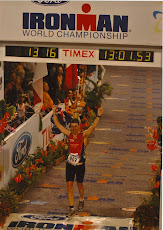
Having had 6 months off work in 2010 and travelling to Europe, I came back from a wonderful holiday with a happy mind, and a slightly less fit body! However hard work and in December I finished Ironman Western Australia in a tick over 13 hours, so the fitness was back.

I have a few friends doing the MDS in 2011 so on 21st December I sent an email to Jay Batchen at Dreamchasers (the agent for the event for Australia - a US based company) asking about the availability of spots.

The reply....
Hi Chris,

Thank you for your note. In fact, we received an cancellation for the 2011 just last week and do have a spot open for the upcoming race. However, the deadline for submitting our final race roster is this Wednesday, December 22. While your documents wouldn’t need to be in our office, we would need a deposit of US$1,500 in order to add your name to the list. (The balance of US$2,225 is due in mid January.) I could send an invoice through PayPal for the first payment, but a processing fee would be included to cover the service fees for PayPal.

For the documents, you would need to complete the following documents and send them to our office along with: 3 passport sized photos and a clear copy of your passport…


HOLY CRAP. So I had 24 hours to make a decision whether I wanted to do the event or not....

I spoke to my gorgeous partner Jill... and we talked about it. Being entirely wonderful she would support me in whatever I wanted to do, as I would with her.

So... take the spot, or pass?

I had a great time at Ironman Western Australia, felt really pleased with my result, but I have now done that event 7 times, and the sheer thrill and excitement of doing it has waned. However the thrill of the challenge of Comrades, or Hawaii Ironman was something that was memorable, scary, and something that I didnt experience in a normal ironman anymore.

So, to really test myself, to chase that feeling of the unknown, the "could I do it" sensation... I entered, and paid $US 1500 less than 24 hours after that initial email.

In late January I paid the balance and I was in...

What on earth have I got myself into!!!!

The challenge now... was to get fit enough to cover 250km in a week, and get the logistic right...

Saturday, February 19, 2011

Marathon des Sables - About the Event

The Marathon des Sables (Marathon of the Sands) is an iconic event in the world of ultra-marathons. It is held in the Sahara Desert in Morocco in March / April each year and the course is unknown to participants until they arrive at the event.

Competitors must carry all personal belongings and food for the entire event in their backpack. Water and tents are supplied by the organizers.

Competitors congregate in the town of Ourzazate (pronounced Waah - zar - zar - tay) and are taken by bus into the desert. On the bus, the event details are provided to them. The next day is an administration / acclimitsation day where the necessary medical checks and checks of compulsory gear / food requirements and only then, are you cleared to start.

Each participant sleeps with 7 other tent mates under a tarpaulan style beduoin tent, that is best described as shelter rather than a tent, as it remains open to the elements. The race each year has around 800 participants, so its always best to have ear plugs... there has to be a few snorers in that many people!!

Distances vary each year, but I have seen some stats on the average distances on the various days of the event for the past 5 years or so, and they are as follows:

Day 1: 30km - just to ease you into the event
Day 2: 35km - a solid day out on the desert, hopefully no blisters yet
Day 3: 38km - by now your legs are getting the hang of this event... hopefully
Day 4: 78km - yes, the big day. The first 3 days are a prelude to this day.
Day 5: Rest day... competitors have around 34 hours to complete day 4, so some competitors sleep in the desert at various check points, or where they feel comfortable, and finish the next morning.
Day 6: 42k - a marathon. I hope you got some rest yesterday, you have a full marathon to do today... but take heart, once this day is done, you're almost home!
Day 7: 16km - just an easy jaunt to the finish line to pick up your medal.

What makes this event so iconic is that it challenges you on so many fronts. Sure, there is the actual distance - something that you cannot underestimate, you must respect the distance and manage your energy and resources.

Secondly there is your backpack. It is your home for a week and you have to carry it, so it has to be comfortable and big enough to carry all your needs, but light enough so you can move with it. Efficiency in packing is the way to go. As a result, most people take a combination of freeze dried meals (simply add water), gels and energy bars to get through.

Thirdly there is hygiene. There are no showers, toilets etc, so you need to make sure you dont get sick and maintaining appropriate hygiene is important. Its hard to run if you have the trots every day....

Fourthly there is the comfort v weight trade off. Do you want to bring a stove to heat up your meals? Or just use water and cook them in the hot sand? Do you want to bring a sleeping mat to put under the sleeping bag... but then you have to carry it.

Really, the event is all about trade-offs and choices. You can take your bar fridge, a 4 seater couch and a tv... if you can carry it! You can try and run at olympic 5km pace... but if you've knackered after 25 mins... you still have a long way to go! You can walk it... but you'll be out there for a long time and will you have enough water to get to the next check point (about 10kms apart, and you get 1.5 litres at each check point).

Its a magic event because of the combination of all these challenges, and that's even before you consider the terrain (sand dunes, dried river beds, extensive rocky ground, hills and mountains so steep you need a rope to climb up them...), the day time temperatures (up to 49C) or night time chills (down to 3-5 C).

Entry for Australian's is through an American company called Dreamchasers. This what how Dreamchasers describe the event...

The Marathon Des Sables (or MDS) is a 145 mile, seven-day stage race conceived and organized by Frenchman Patrick Bauer and Atlantide Organisation Internationale. While the event can be very demanding if you are racing, the daily time cut-offs are generous enough to allow someone to power-walk the entire 145 miles. Consequently, it is not necessary to be an elite runner to take part in the Marathon Des Sables.

During the event, competitors run on foot through some of the most beautiful, remote sections of the Moroccan Sahara while carrying a backpack with essential gear, food, sleeping bag and clothing for the week. The race organizers provide water (generally 9 liters per day) and a traditional, two-sided Berber tent each night for sleeping during the seven days of racing.

There are six stages over the seven days, with the first three daily stages set around 20 miles each. The fourth stage is around 50 miles; the fifth stage is always a full marathon of 26.2 miles, and the sixth (and last) stage is from 9-12 miles.

Runners are typically given 40 hours to complete the 50 mile stage, with most finishing the stage in one day. This essentially provides most people with a rest day in between the 50 mile stage and the Marathon stage. Each year brings a new course, which is not revealed until two days before the race.

The terrain at the MDS is not all giant sand dunes. In fact, most of the course is run over salt flats, dried up river beds, rocky desert plains, and ancient, dried up lakes. And, it is not uncommon for the course to wander through a remote desert village. The course is usually well marked and all competitors receive a "Road Book" which provides an official course description for each stage.

Temperatures can be extreme, with possible daytime highs reaching 125°F and night-time lows of 38°F. Additionally, the occasional sandstorm can add to the mix. Thus, competitors should be prepared for anything.

As a further guide, here are some pictures of prior events, to give you an idea of the terrain, the gear participants carry, and the Moroccon scenery...